A clogged condensate line or a cracked drain pan can quietly soak an attic, closet, or ceiling for days before it is noticed. Vista crews respond around the clock to find the source and dry the space before mold gets a foothold.

A crew typically arrives in about an hour to confirm the water is from the HVAC system and not a roof or plumbing source before cleanup begins.
Water pooled in the drain pan area, attic insulation, or closet flooring is extracted, with saturated insulation removed where it cannot be dried.
Moisture meters and thermal imaging trace how far water has spread through ceiling drywall, framing, and attic insulation from the overflow point.
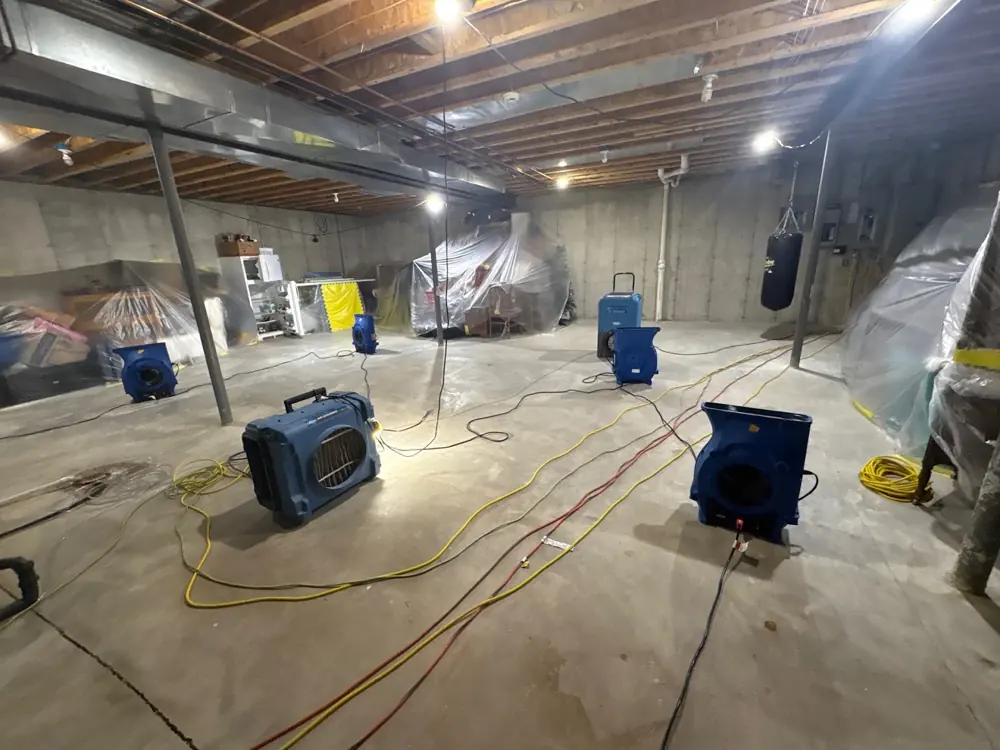
Air movers and dehumidifiers dry the ceiling cavity and attic space, with moisture readings logged until the area reaches a verified dry baseline.

While help is on the way, these first steps, done only where it is safe, limit the damage and protect the insurance claim.
Shut the supply off at the source, or close the home's main valve if the source is not obvious. Stopping the flow limits the damage more than anything else.
Switch off electricity to the affected area, but only if the breaker can be reached without standing in or touching the water.
Get a crew dispatched right away. The sooner extraction and drying begin, the more flooring, drywall, and belongings can be saved.
Take photos and a short video of the water and the affected rooms before anything is moved, so the insurance claim starts strong.
HVAC condensation damage cleanup in Vista generally runs from about $400 to $2,000, depending on how long the overflow ran before it was caught and whether ceiling drywall needs to be opened. A slow drip caught within a day or two, limited to a small ceiling stain, sits at the low end. An overflow that ran for weeks and saturated attic insulation and a larger section of drywall runs higher. HVAC repair itself is separate work handled by a qualified HVAC technician, and moisture documentation is provided for the homeowner's insurance carrier.
Crews reach Vista and inland North County San Diego fast, from Downtown Vista, Shadowridge, and Rancho Buena Vista to Oceanside, San Marcos, Carlsbad, Escondido, Bonsall, and Fallbrook. See the full list on the areas served across Vista page.
See all areas servedEvery loss is photographed, measured, and logged from the first visit, so the paperwork holds up with the insurance carrier.
Technicians follow recognized IICRC drying standards and prove it with daily moisture readings on Vista homes, not guesswork.
Emergency dispatch any hour of the day or night, with a real crew on the way across inland North County, not a callback in the morning.
A real crew dispatched any hour, not a callback in the morning.
Trained technicians following recognized IICRC drying standards.
Truck-mounted, portable, and submersible for any size loss.
The loss is documented and billed to the carrier directly.
A clogged condensate drain line is the most common cause, along with a cracked or rusted drain pan, a disconnected drain line, or a frozen evaporator coil that later thaws and overflows the pan.
No. This service addresses the water damage caused by the overflow. Repairing or servicing the HVAC system itself, including clearing the condensate line, is handled by a qualified HVAC technician.
Ceiling stains from HVAC overflow are often located below or near an attic-mounted or closet-mounted air handler and tend to grow slowly. A moisture inspection can confirm the source before assuming it is a roof leak.
Fiberglass insulation that has been saturated typically needs to be removed and replaced rather than dried, since wet insulation loses effectiveness and can promote mold growth if left in place.
Sudden overflow from a mechanical failure is often covered, while damage from a drain line that was clogged for a long period without maintenance can be treated differently. Documentation supports the claim either way.
Vista crews are on call 24 hours a day, local and fast, and can be on the way within the hour.
Call (760) 334-5108