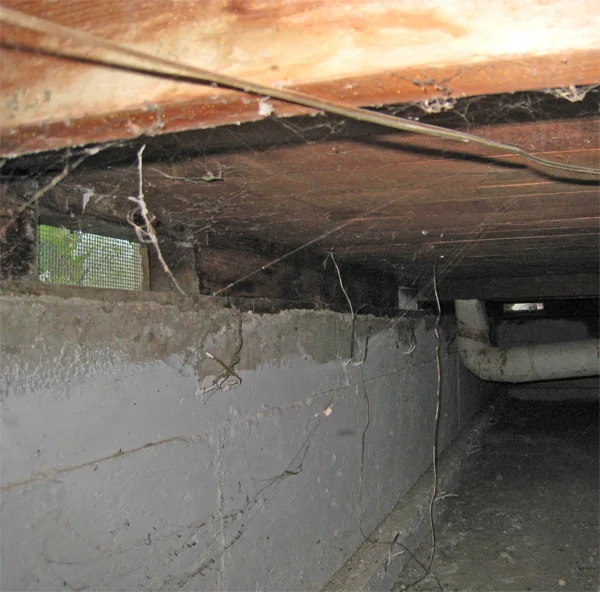
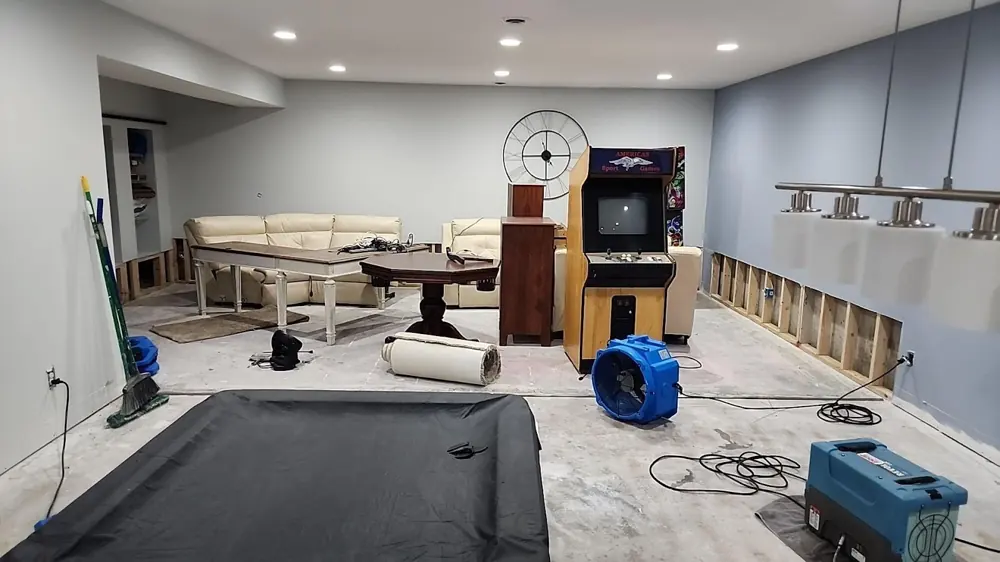
Not every Vista home sits directly on a slab; older and hillside properties are often built on a raised foundation with a crawlspace underneath, and water that collects there can sit unnoticed for weeks. A crew typically arrives within about an hour to extract standing water and dry the space before it reaches the framing above.

The crew accesses the crawlspace to identify the source, whether that is grading runoff, a plumbing leak, or vapor barrier failure.
Submersible pumps and wet vacuums remove standing water from the crawlspace floor.
Moisture meters check the floor joists and subfloor from below for saturation that could affect the living space above.
Air movers and dehumidifiers dry the crawlspace, and the vapor barrier condition is assessed to help prevent the same water intrusion from recurring.

While help is on the way, these first steps, done only where it is safe, limit the damage and protect the insurance claim.
Shut the supply off at the source, or close the home's main valve if the source is not obvious. Stopping the flow limits the damage more than anything else.
Switch off electricity to the affected area, but only if the breaker can be reached without standing in or touching the water.
Get a crew dispatched right away. The sooner extraction and drying begin, the more flooring, drywall, and belongings can be saved.
Take photos and a short video of the water and the affected rooms before anything is moved, so the insurance claim starts strong.
Crawlspace water removal in Vista typically runs from about $600 to $2,800 depending on the size of the crawlspace, how long the water sat before discovery, and whether the subfloor and joists above need additional drying or repair. A recently discovered leak with prompt extraction sits on the low end; long-standing water that soaked into joists and subfloor over weeks sits toward the high end. The homeowner is directed to a qualified plumber or foundation specialist if the source is a plumbing leak or a grading issue.
Crews reach Vista and inland North County San Diego fast, from Downtown Vista, Shadowridge, and Rancho Buena Vista to Oceanside, San Marcos, Carlsbad, Escondido, Bonsall, and Fallbrook. See the full list on the areas served across Vista page.
See all areas servedEvery loss is photographed, measured, and logged from the first visit, so the paperwork holds up with the insurance carrier.
Technicians follow recognized IICRC drying standards and prove it with daily moisture readings on Vista homes, not guesswork.
Emergency dispatch any hour of the day or night, with a real crew on the way across inland North County, not a callback in the morning.
A real crew dispatched any hour, not a callback in the morning.
Trained technicians following recognized IICRC drying standards.
Truck-mounted, portable, and submersible for any size loss.
The loss is documented and billed to the carrier directly.
Common signs include a musty odor inside the home, unexplained humidity, soft or springy spots in flooring above the crawlspace, or a visible increase in pests. Since the space is rarely visited, these indirect signs are often the first clue.
Grading that slopes toward the foundation instead of away from it, a failed or missing vapor barrier, and slow leaks in plumbing lines that run through the crawlspace are the most common causes.
Often yes, if the water is removed and the space dried before rot sets in. Prolonged saturation over weeks or months raises the risk that some joists or subfloor sections need structural repair.
No, grading and drainage work is outside this scope. The homeowner is directed to an appropriate contractor when poor grading is identified as the cause, alongside the water removal and drying work.
Sudden plumbing failures are commonly covered. Water intrusion from long-term grading or drainage problems is often treated as a maintenance issue, so the likely cause is documented as part of the assessment.
Vista crews are on call 24 hours a day, local and fast, and can be on the way within the hour.
Call (760) 334-5108